
It was always there.
This book wasn’t written to be read in order. It was shaped to be entered.
Most books assume clarity comes from accumulation. From adding ideas, refining arguments, and moving step by step toward understanding.
This one begins from a different premise. That clarity is often revealed not by adding more, but by noticing what’s already present once something unnecessary falls away.
The structure reflects that belief.
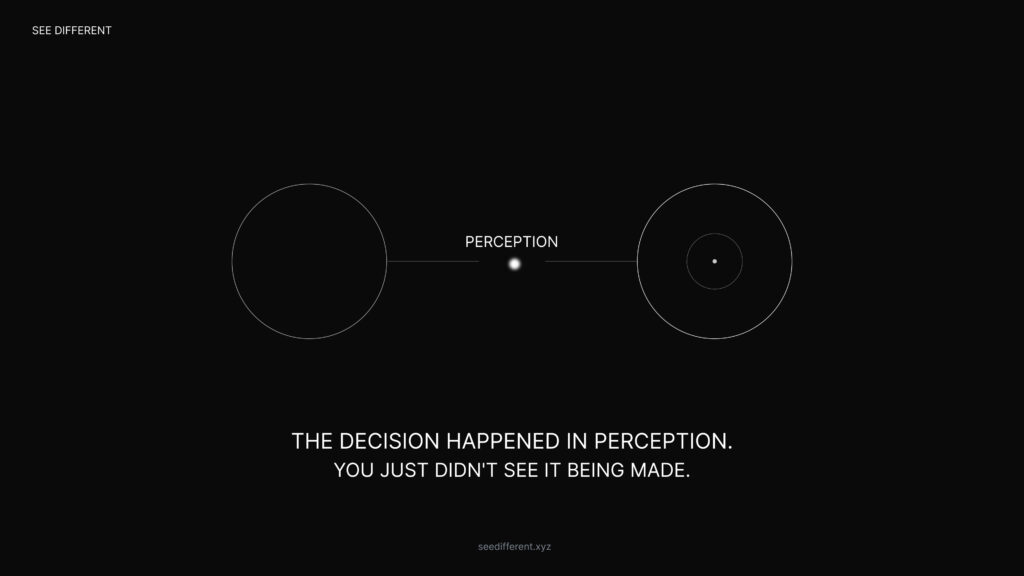
Rather than chapters that build on one another, this book is organized around doorways. Each doorway marks a shift in how perception operates. Not a concept to adopt, but a way of seeing that becomes available when the conditions are right.
What follows each doorway are explorations—short reflections paired with images—that invite you to slow down and notice what you’re already sensing, but may not yet have named.
There is no recommended path through these pages. No starting point, no finish line. You don’t need to read everything, and you’re not expected to. Some explorations will feel immediately familiar. Others may not register at all. That’s not a problem. It’s part of the design.
This book trusts that attention is a better guide than instruction. That what matters will quietly draw you toward it. And that forcing meaning only creates more noise.
If you find yourself trying to “get” the book, it may help to pause. Let the visuals do some of the work. Notice which doorway you’re drawn to, and which ones you pass by without interest. Both responses are useful. They’re information.
Leadership, awareness, perception—these aren’t things to master. They’re not skills to develop or traits to acquire. They tend to emerge naturally when the effort to manage experience softens, and when seeing becomes a little less crowded by habit and assumption.
Think of this book less as something to consume and more as a place to return to. A space where you can check how you’re seeing, not just what you’re seeing. Where questions matter more than answers, and where clarity isn’t something you chase, but something you recognize.
Move slowly. Skip freely. Stay where something holds your attention.
That’s enough.
