
Seeing isn’t a new perspective. It’s what becomes available when distortion falls away.
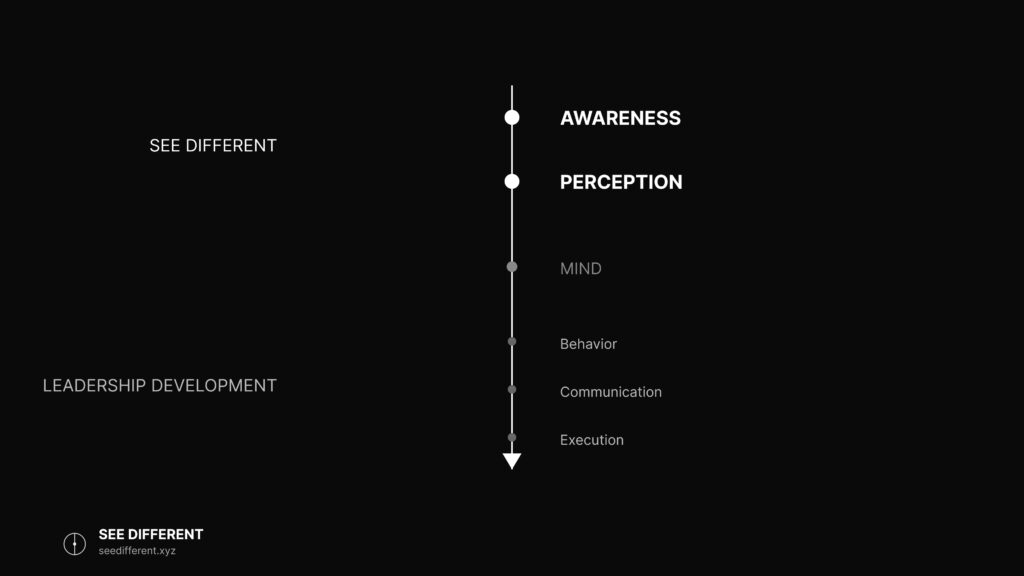
Most leadership work begins downstream, focused on communication, execution, and outcomes. The effort is directed toward improving what people do once decisions are already in motion. When those efforts fall short, the response is often to add more structure, move faster, or introduce new techniques.
The assumption beneath all of this is rarely questioned—that reality is already being perceived clearly, and the problem lies only in how it’s being acted upon.
Over time, that assumption breaks down.
Perception is not neutral. It is shaped by habit, fear, identity, and the quiet need for certainty. When perception is distorted, even well-intended action creates friction. Progress slows. Trust erodes. Leadership begins to feel heavier than it should.
Seeing operates earlier than most leadership approaches acknowledge. Not because it is better, but because it comes before action.
When perception shifts, action reorganizes on its own. Less effort is required to align people. Fewer controls are needed to maintain momentum. Many of the behaviors organizations try to engineer begin to emerge naturally.
Psychological safety offers a simple illustration. It does not come from inviting dissent or applying the right techniques. It emerges when leaders are no longer defending an identity—when there is no internal need to be right, protected, or validated. In those conditions, people speak more freely. Listening deepens. Trust develops without being manufactured.
Seeing is not self-improvement or mindset work. Those approaches operate within thought. Seeing happens prior to it.
Nothing new is added. What changes is what is no longer in the way.
This shift is still early in many organizations, but the direction feels unavoidable. As complexity increases and familiar leadership tools lose effectiveness, the ability to see clearly before acting becomes a practical necessity.
This isn’t a philosophy. It’s a foundation.
